Solar Estimator
Select a power station and panel setup to see how quickly solar can recharge your battery — and whether it can keep up with your daily energy use.
Solar Estimator
Configure your panel and station, then see how long recharging will take under real-world conditions.
Power station
Type to filter by brand or model. Selecting a station auto-fills capacity and solar input.
Battery
Leave blank if unknown — no cap will be applied.
Panel & sun conditions
Total rated wattage of your panel array. Real-world output is usually 65–85% of this figure.
Peak sun hours
4.5 h/dayDesert Southwest / summer: High. Pacific Northwest / winter: Low. Most of the US averages 4–5 h/day.
Charge range
Daily energy useOptional
How much energy you consume per day. Unlocks daily harvest coverage (%) and panel size recommendation. Leave blank to skip.
Real-world efficiency
Accounts for heat, angle, wiring, and conversion losses.
Estimated recharge
Your panel wattage (200W) exceeds this station's maximum solar input (100W). Effective charge input is capped at 100W.
How much peak solar time your setup needs
Solar input breakdown
How your rated panel wattage is reduced to an effective charge input.
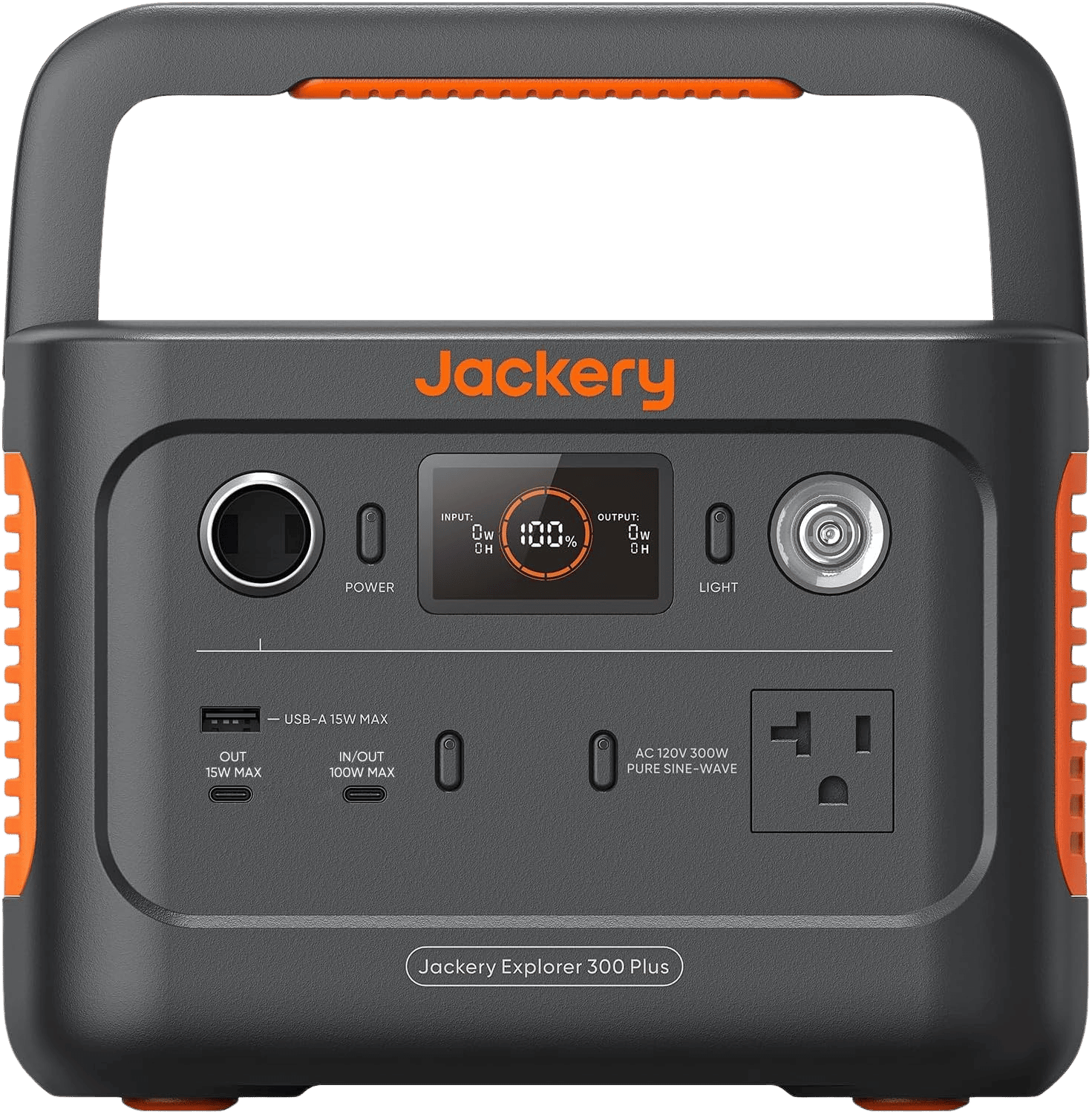
Ready to go solar with Jackery Explorer 300 Plus?
Affiliate link — helps support WattMatch
View full specs →How this works
Panels rarely hit their rated wattage
A 200W panel produces 200W only under ideal lab conditions. Heat, angle, and partial shade reduce real-world output. This tool applies an efficiency factor (default 75%) to give you a realistic figure.
Your station caps the input
Most power stations have a maximum solar input rating. Connecting more panel wattage than the station accepts doesn't speed up charging — it's capped at the station's limit.
Sun conditions vary by location
Peak sun hours measure how much usable solar energy reaches your location per day. Desert Southwest summers can hit 6+ h/day; cloudy northern winters may be as low as 2 h/day.
The result is a real-world estimate
We calculate (panel watts × efficiency) to get effective charge rate, then divide your battery deficit by that rate to find sun-hours needed — and divide by peak sun hours to get days.
Keep in mind
Real-world solar output is affected by clouds, panel temperature, shading, cable losses, and the angle of your panel relative to the sun. Estimates are most accurate under consistent, unobstructed sunlight. For cloudy or partly shaded conditions, use the "Low" sun preset or drop the efficiency factor to "Conservative" for a more cautious number.
Want to see how long your battery will last on a single charge?