Best Portable Power Stations for Apartment Blackouts
Apartment outage prep is not about pretending you can power a whole house. It is about keeping the essentials alive quietly, safely, and without hauling a giant battery up the stairs.
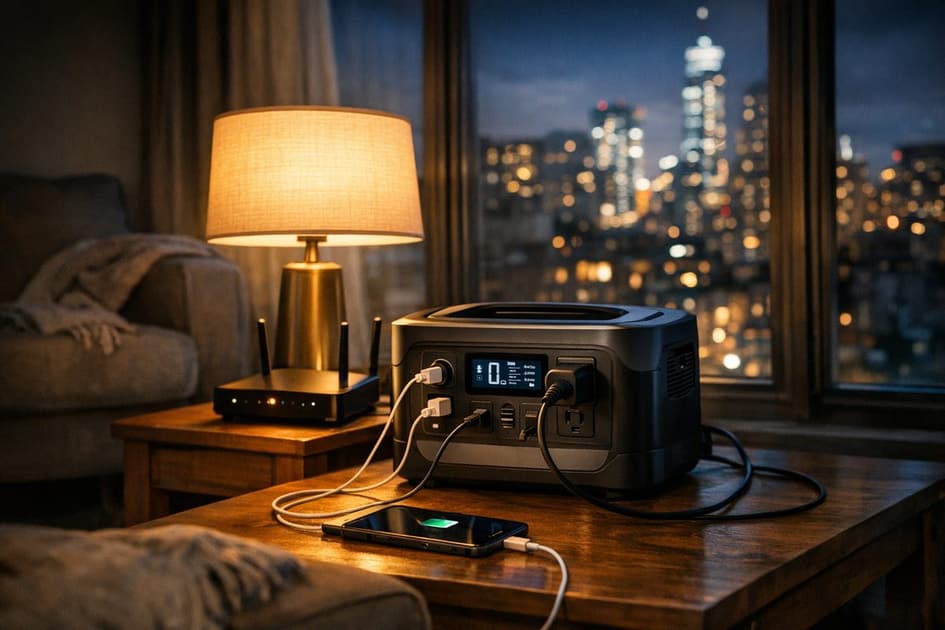
A good portable power station for apartment blackout use should keep the basics alive: router, phones, lights, maybe a fan, and in some cases a CPAP. That is the real job. Apartment backup is not whole-home replacement, and pretending otherwise usually leads to buying something too big, too heavy, and rarely used.
This guide is for renters and city dwellers who need quiet indoor backup that fits a closet, can be carried up stairs, and makes sense for realistic blackout loads. We focus on spec-backed picks from our broader portable power station lineup, with enough Wh and AC output for apartment essentials and none of the generator nonsense that does not belong in a hallway or living room.
Runtime
Estimate your runtime
Trying to figure out whether your apartment blackout kit is enough? Plug your router, lights, and charging setup into the runtime calculator before you buy.
Free · No signup · ~30 sec
Quick recommendations for a portable power station for apartment blackout
- Best overall: EcoFlow DELTA 3 Plus gives you 1024Wh, 1800W AC, and strong headroom for multi-device outage backup without getting absurdly large.
- Best compact: EcoFlow RIVER 3 Plus is the easiest pick for renters who want something light, closet-friendly, and practical for short blackouts.
- Best value: BLUETTI AC50B hits a very useful middle ground with 448Wh, 700W AC, and a manageable 14.8 lb carry weight.
- Best for runtime: Jackery Explorer 1000 v2 gives you the biggest capacity here at 1070Wh while still staying relatively easy to move at 23.8 lbs.
The picks
EcoFlow DELTA 3 Plus
Best overall apartment backup: This is the most balanced choice for people who want one battery backup for apartment outages and do not want to second-guess every device they plug in. With 1024Wh and 1800W AC output, it has enough capacity for the normal apartment stack: router, phones, LED lights, laptop, TV for a while, and often a fan or CPAP depending on the setup.
It makes the most sense for renters who want longer runtime without jumping to a monster unit. The 27 lb weight is still noticeable, but it stays on the right side of “carryable,” which matters when the elevators are out and stairs are your only option. Hauling a 40-pound battery up three flights is a physical fitness test nobody asked for; 27 lbs is far more realistic.
The honest tradeoff is size and cost relative to the smaller picks here. If your blackout plan is just phone charging, a lamp, and internet for a few hours, this can be more battery than you actually need.
Its clearest spec-backed differentiator is the combination of 1024Wh capacity, 1800W AC output, and 10ms UPS support. That makes it a stronger fit if you want better coverage for mixed loads now and some room to grow later, especially since it is expandable to about 5kWh. For apartment outage planning, that extra headroom matters more than flashy surge claims.
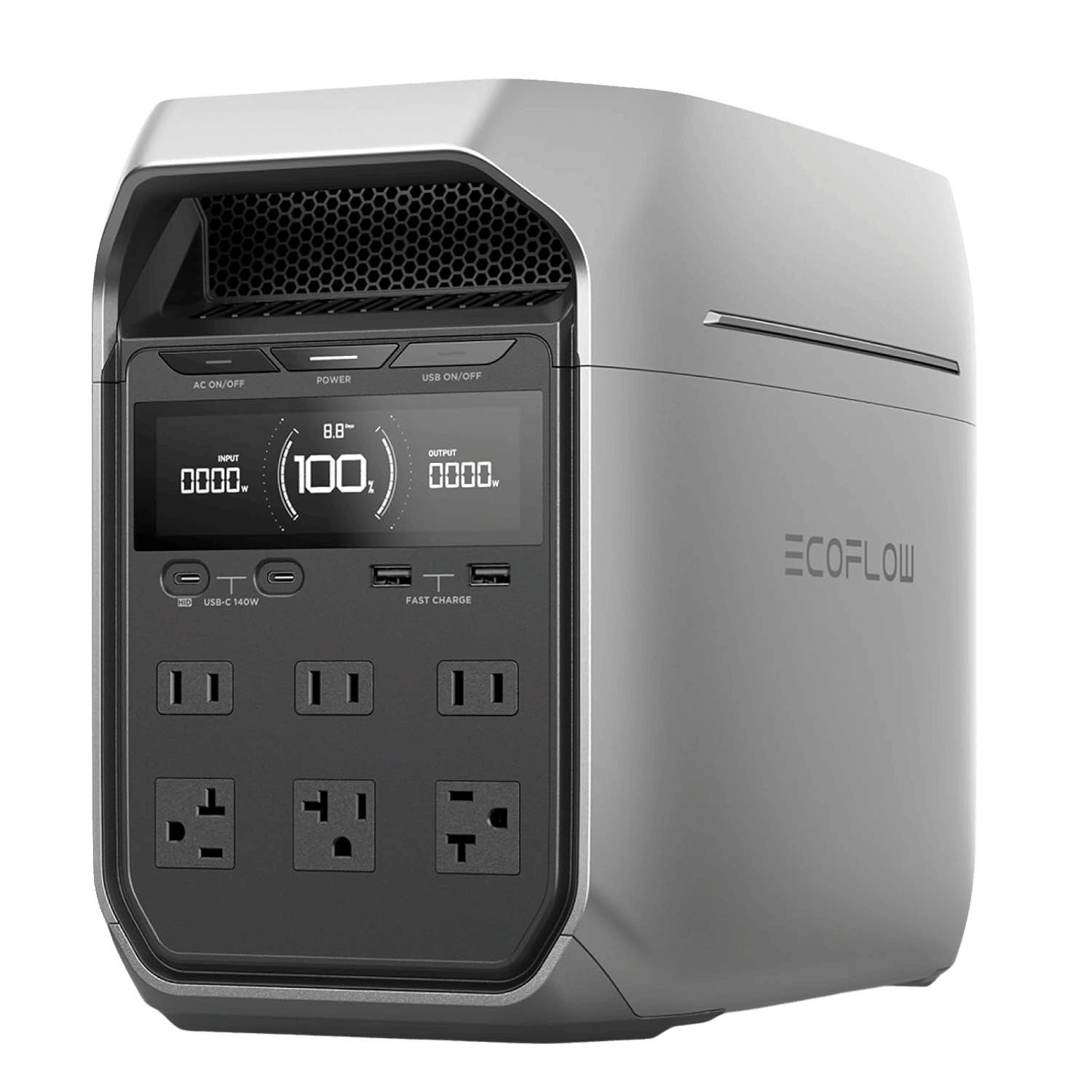
EcoFlow DELTA 3 Plus
1024Wh LFP, 1800W AC + 140W USB-C, X-Boost >2200W resistive, ~27 lb, expandable ~5kWh, 10ms UPS.
⚡ ~56 min AC recharge
~$649
Check price on AmazonView full specs →Purchase links may be affiliate links — To Support WattMatch
Jackery Explorer 1000 v2
Best easy emergency pick: The Jackery Explorer 1000 v2 is the one to choose when you want near-full-size apartment outage backup without overthinking setup or portability. It gives you 1070Wh, which is the largest capacity in this group, plus 1500W AC output in a body that still weighs 23.8 lbs.
This is best for people who want a straightforward emergency battery they can store, grab, and use for longer outages. A router, phones, lights, and laptop load is well within its range, and the extra Wh gives you more margin overnight. That tends to matter when outages drag past bedtime and you stop caring about “nice to have” devices and start caring about Wi-Fi, light, and one charged phone in the morning.
The limitation is that its AC output is lower than the DELTA 3 Plus at 1500W versus 1800W, so it gives up some headroom for heavier appliances. For most apartment blackout loads, that is not a problem. But if you want the broader safety margin for overlapping devices, the EcoFlow has the edge.
What makes this one easy to recommend is the 1070Wh capacity at just 23.8 lbs. That is an unusually practical weight-to-capacity balance for renters, and it is why this one lands so well as a simple apartment power outage backup pick.
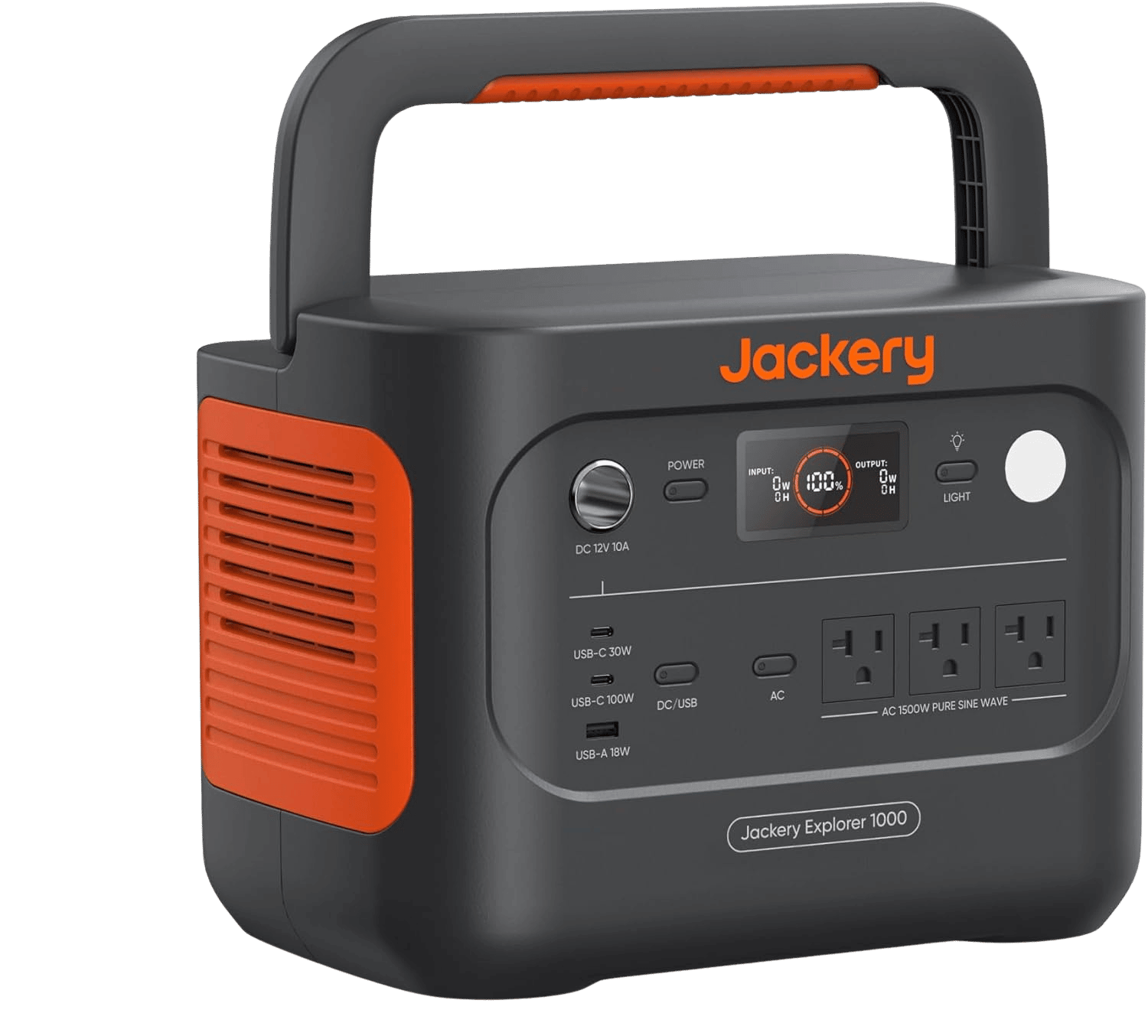
Jackery Explorer 1000 v2
1070Wh LFP, 1500W AC (3kW surge), ~1 hr app emergency charge / ~1.7 hr default, 23.8 lb.
⚡ ~1 hr AC recharge
~$449
Check price on AmazonView full specs →Purchase links may be affiliate links — To Support WattMatch
EcoFlow RIVER 3 Plus
Best compact blackout pick: A small blackout station is often more useful than a giant unit you hate moving, and the RIVER 3 Plus proves that. At 10.4 lbs with 286Wh and 600W AC output, this is built for the apartment essentials tier: router, phone charging, a few LED lights, laptop, and other low-draw devices.
It is best for solo renters, short outages, and anyone living in a tighter space where every inch matters. This one is easy to stash in a closet, easy to pull out fast, and easy to carry one-handed. In a small apartment, that convenience usually matters more than theoretical maximum backup plans.
The downside is simple: 286Wh is limited. You need to be realistic about runtime. This is not the pick for running a bunch of devices all night, and it is not the safest recommendation if your outage plan depends on longer CPAP backup. For that, check a more dedicated CPAP backup guide or use our runtime calculator before you buy.
Its differentiator is portability first, with a useful extra: it can expand to 858Wh later. That gives apartment users a low-commitment entry point now, while keeping a path open if their blackout plan gets more serious.
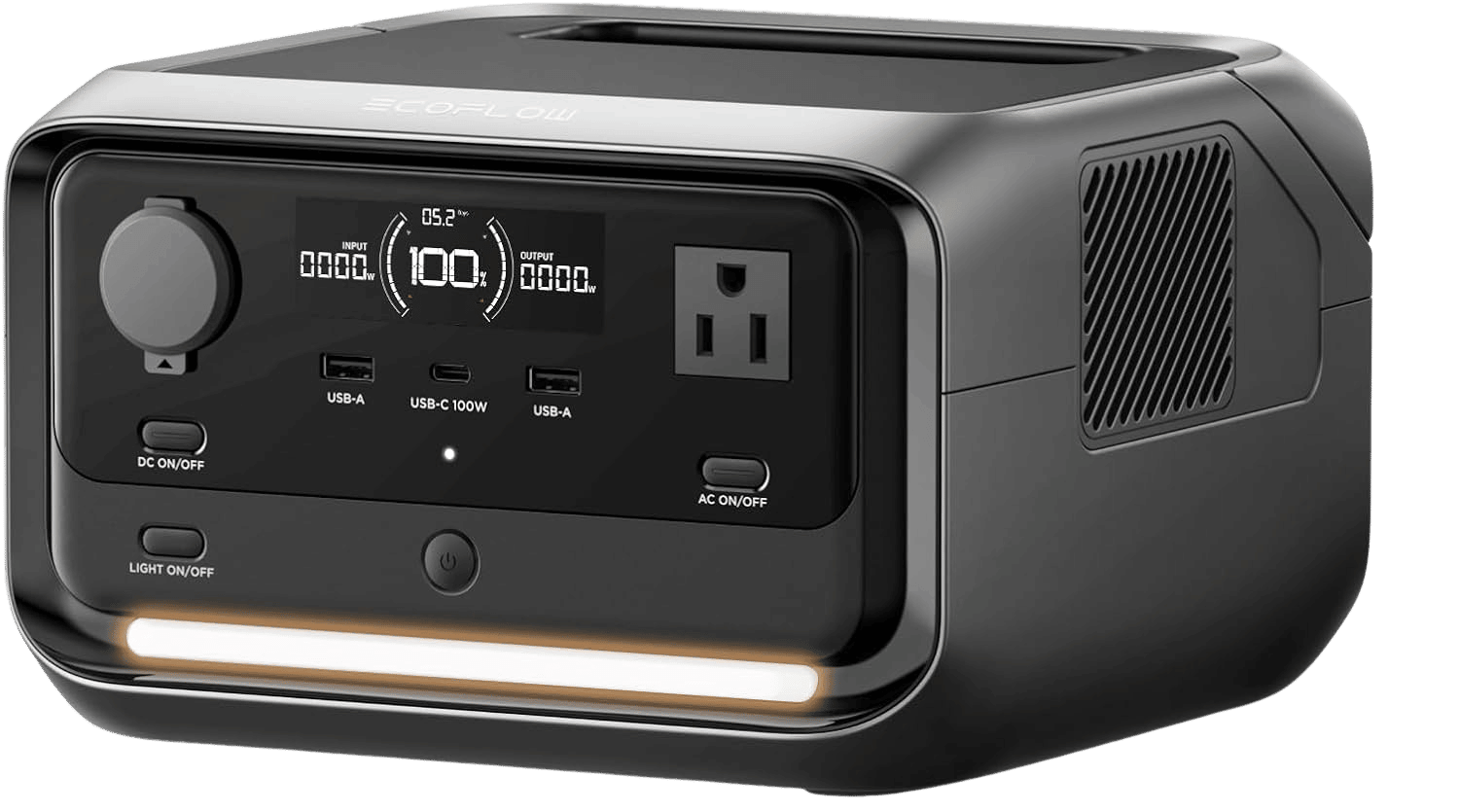
EcoFlow RIVER 3 Plus
286Wh LFP, 600W AC, 3 outlets (X-Boost ~1200W), ~1 hr charge, 220W solar, expandable to 858Wh.
⚡ ~1 hr AC recharge
~$269
Check price on AmazonView full specs →Purchase links may be affiliate links — To Support WattMatch
BLUETTI AC50B
Best small-space value pick: The BLUETTI AC50B makes sense when you want more runtime than the smallest class without stepping up to a near-1000Wh unit. Its 448Wh capacity and 700W AC output land in a sweet spot for apartment use, especially for renters trying to cover the basics and stay within reason on size.
This is best for people who want a practical battery backup for apartment use in a studio, one-bedroom, or dorm-like setup. It is enough for the common outage stack of router, phones, lights, and some laptop time, and the 14.8 lb weight is still easy enough to move from closet to bedroom to kitchen without turning it into a chore.
The tradeoff is that it sits in the middle on everything. It does not have the long runtime of the 1000Wh-class units, and it is not as tiny as the RIVER 3 Plus. That means it works best when your loads are modest and your expectations are realistic.
Its strongest spec-based edge is the combination of 448Wh, 700W AC, and six outputs at 14.8 lbs. That package is hard to ignore for apartment blackout use, where quiet indoor operation and small-space practicality matter more than pretending you are backing up a whole house.
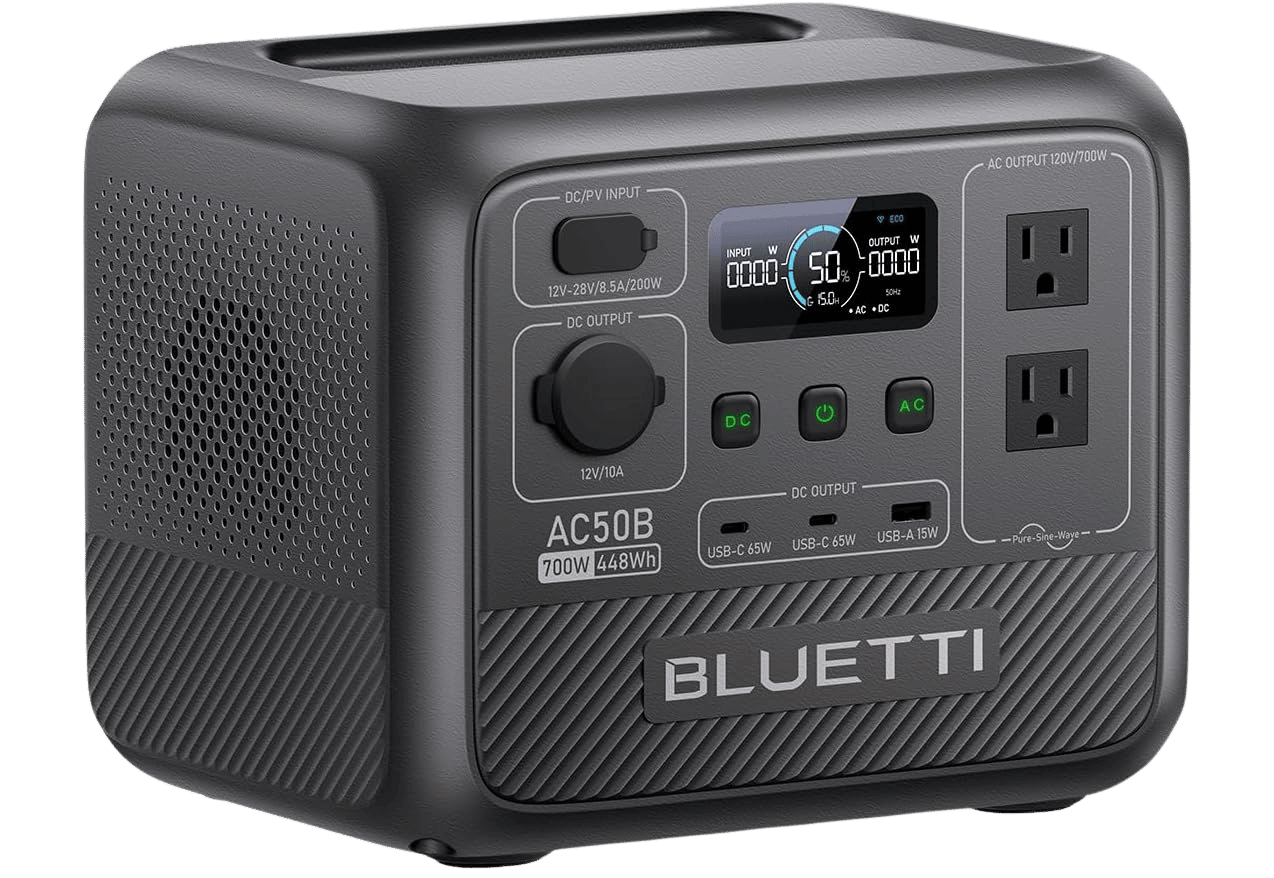
BLUETTI AC50B
448Wh LFP, 700W AC (1000W lifting), 6 outputs, ~45 min to ~80% turbo, ~14.8 lb—camp & outage.
⚡ ~45 min AC recharge
~$279
Check price on AmazonView full specs →Purchase links may be affiliate links — To Support WattMatch
How to choose
For apartment blackout prep, start with your actual loads, not the fantasy version of your loads. Most renters need internet, phone charging, a few lights, maybe a laptop, maybe a fan, and sometimes a CPAP. That is a very different use case from running a fridge, microwave, and half a house. If your goal is broader outage planning, our home backup guide is a better place to map that out.
Capacity in Wh is what determines runtime. Output in W tells you what the station can run at one time. A 1000Wh-class unit usually gives you much better overnight margin than a 300Wh to 450Wh unit, but it also takes more space and more effort to move. The common failure point is buying too small for runtime, or too big to want to carry.
Noise matters more in apartments than people expect. Quiet is not a luxury when the unit is sitting three feet from your bed in a blackout. A loud cooling fan gets old fast in a studio or bedroom. Battery stations are still far more apartment-friendly than gas generators, and they are indoor-safe, but smaller and lower-draw setups usually stay easier to live with.
Weight matters too. In a garage, extra pounds are annoying. In a walk-up or high-rise, they can be the deciding factor. Most users are better served by a portable unit they will actually move and charge than by a giant battery they leave buried in a closet because it is a pain to handle.
A few quick rules help:
- Around 250Wh to 500Wh: best for short outages and basic essentials.
- Around 1000Wh: better for overnight coverage and more margin.
- 600W to 700W AC output: enough for small electronics and many apartment basics.
- 1500W to 1800W AC output: better if you want more flexibility or occasional heavier loads.
- LiFePO4: a strong fit for backup use because of longer cycle life and better durability.
If you are unsure, run your devices through the runtime calculator before choosing. Ten minutes of watt-hour math beats buying the wrong battery.
FAQ
What should a power station run during an apartment blackout?
Focus on essentials: router, modem, phones, LED lights, laptop, maybe a fan, and sometimes a CPAP. A battery backup for apartment use should cover those realistic loads first, not try to act like a whole-home system.
Is a portable power station safe to use inside an apartment?
Yes, these battery power stations are intended for indoor use. That is a major reason they fit apartment living better than a generator. Quiet indoor operation also matters a lot more in apartments, where the unit may sit in your bedroom or living room during the outage.
How much capacity do I need for apartment power outage backup?
For short outages, 286Wh to 448Wh can be enough for phones, internet, and lights. For overnight backup or more margin, 1024Wh to 1070Wh is much safer. The right answer depends on your device wattage and runtime goals.
Is a small power station better for renters?
Often, yes. A small blackout station is usually more practical than a giant unit you never want to move. In apartments, storage space is tighter, stairs are real, and carry comfort matters more than maxing out spec sheets.
Can these run a CPAP?
Sometimes, yes, but it depends on the CPAP model, humidifier use, and whether you run through AC or DC. The 1000Wh-class models are the safer picks for longer CPAP backup. For exact estimates, use the calculator and compare the machine's draw in Wh terms.
Takeaway
The best portable power station for apartment blackout use is the one that matches real apartment loads, stays quiet indoors, and is light enough that you will actually use it. For most renters, that means choosing enough Wh for routers, phones, lights, and a few essentials, not chasing oversized backup you do not need.
Related guides
These guides cover adjacent buying scenarios worth comparing.
Best Portable Power Stations for Camping (2026)
The best camping power station is usually not the biggest one. It is the unit you can carry easily, recharge fast, and trust to cover the gear you actually bring outside.
Read guide
Top 5 Budget Power Stations Under $300
Cheap power stations are easy to buy and easy to regret. The better budget picks are the ones that give you usable battery, honest limitations, and enough long-term value to avoid replacing them a year later.
Read guide