Best Portable Power Stations for Camping (2026)
The best camping power station is usually not the biggest one. It is the unit you can carry easily, recharge fast, and trust to cover the gear you actually bring outside.
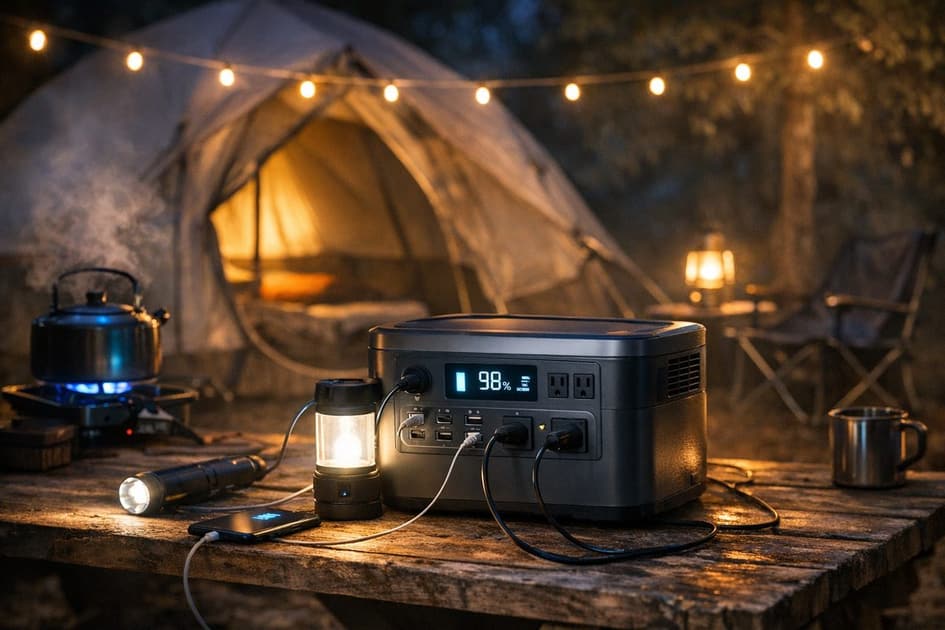
The best portable power station for camping is usually a small-to-mid-size unit around 300Wh, not a giant box with more battery than you can realistically carry. For weekend trips, the sweet spot is enough capacity for lights, phones, a small fan, and camera charging over one to two nights without turning the walk from the car into a chore.
This guide is for campers and families who want practical off-grid power, not RV-scale backup. We focused on the things that matter most at a campsite: staying well under the point where weight becomes annoying, charging speed from solar for multi-day use, and enough USB-C and AC output for modern gear. If you want a broader look at options, see all our portable power stations, or check our full camping power guides.
Solar
Estimate your solar recharge
Planning to bring a portable solar panel on your trip? Run your numbers through the Solar Estimator to see how fast you can recharge your station at the campsite.
Free · No signup · ~30 sec
Quick recommendations
- Best overall: Jackery Explorer 300 Plus is the easiest all-around camping pick for balancing 288Wh capacity, 8.3 lbs portability, and simple 100W solar support.
- Best compact: Anker SOLIX C300 packs 288Wh, 3 USB-C ports, and a broad output mix into a still-manageable 9 lb package.
- Best rugged pick: Goal Zero Yeti 300 adds IPX4 water resistance and a more outdoor-oriented build while staying in the right size class for camping.
- Best for runtime: EcoFlow RIVER 3 Plus is the strongest step-up option thanks to 286Wh capacity paired with 600W AC output and expandability up to 858Wh.
The picks
Jackery Explorer 300 Plus
Best overall for camping: The Jackery Explorer 300 Plus stands out because it hits the camping sweet spot better than most people actually need. At 288Wh and 8.3 lbs, it is light enough to move around camp without regret, but still big enough for the usual loadout: phones, headlamps, string lights, a camera battery, and occasional small-fan use.
It is best for weekend campers who care more about easy carrying than max output. That matters more than people think. Once a power station gets much past 15 lbs, it starts to feel like dedicated base-camp gear instead of something you casually move from the car to the picnic table to the tent. This one stays comfortably below that threshold.
The tradeoff is output headroom. With 300W AC and 600W surge, it is built for lighter camping loads, not power-hungry appliances. If your idea of camping includes pushing bigger AC gear, this is not the step-up pick.
Its clearest spec-backed differentiator is simple: it is the lightest model here at 8.3 lbs while still offering 288Wh, LiFePO4 chemistry, 2 USB-C ports, and 100W solar input. For a modern campsite where phones, tablets, rechargeable lanterns, and cameras all want USB-C, having two native ports is more useful than it sounds. If the unit also includes integrated lighting in your setup, that is a real campsite bonus for quick table lighting or tent organization without burning another device battery.
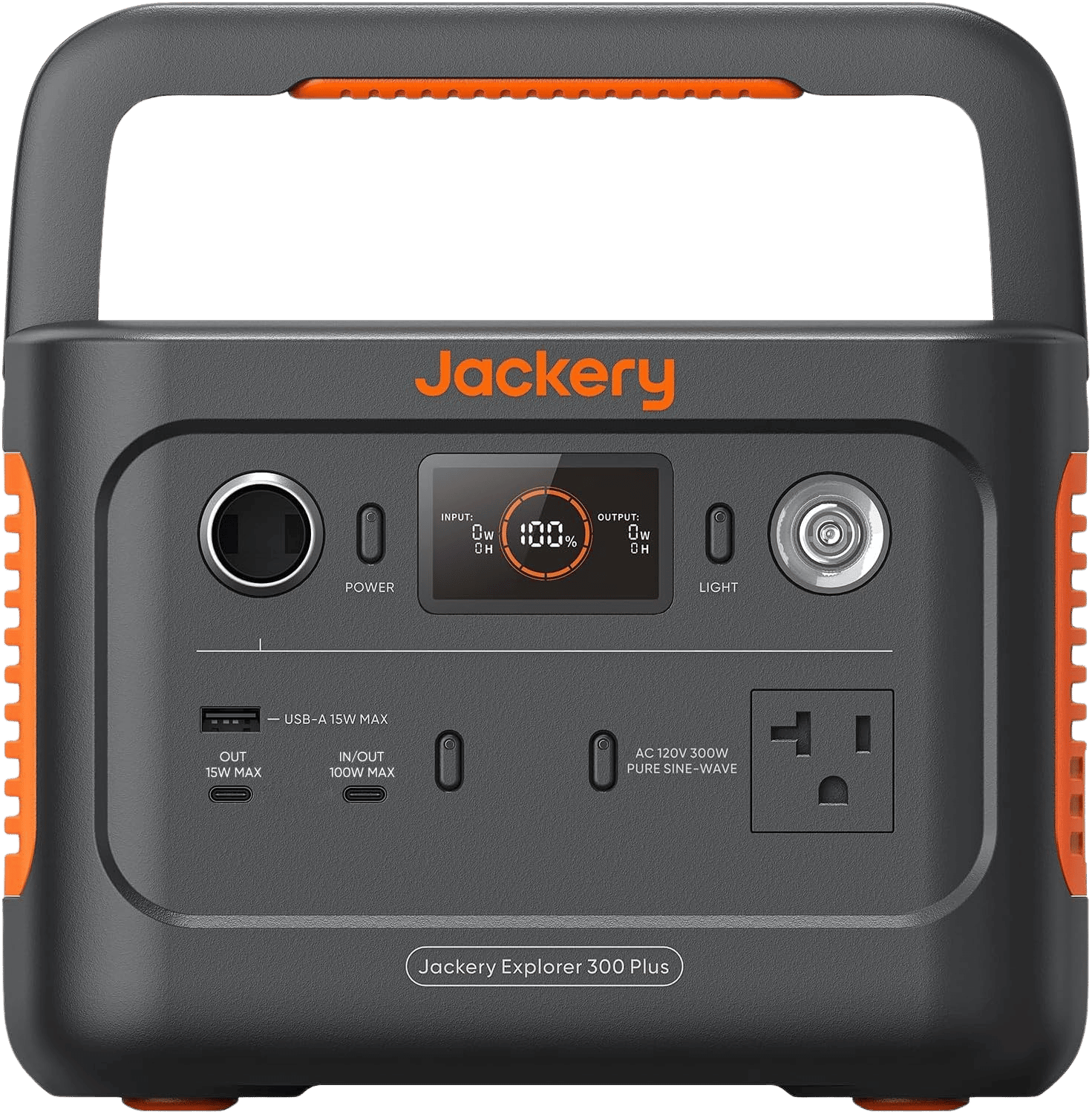
Jackery Explorer 300 Plus
288Wh LiFePO4, 300W AC, ~8.3 lb—compact solar-ready power for RV, camping, and travel.
⚡ ~2 hrs AC recharge
~$299.99
Check price on AmazonView full specs →Purchase links may be affiliate links — To Support WattMatch
EcoFlow RIVER 3 Plus
Best step-up camping pick: The EcoFlow RIVER 3 Plus is the one to choose when your camping setup is starting to outgrow ultra-compact stations. Its 286Wh battery is close to the others on raw capacity, but the big jump is 600W AC output with 1200W surge, which gives you a lot more flexibility for small appliances and higher startup loads.
It is best for campers who still want something portable but need more than just device charging. Think family camping where you may run a fan longer, charge multiple devices at once, and want a little more margin for AC gear. It also makes more sense for two-night trips or multi-day camping where midday recharging matters.
The honest downside is weight. At 10.4 lbs, it is still portable, but it is noticeably heavier than the Jackery. That is not a dealbreaker, just the cost of getting more inverter muscle and faster solar potential in a still-compact box.
The key differentiator is charging flexibility. It supports 220W solar input, which is the fastest solar intake in this group and a big deal on multi-day trips. Solar recharging speed is what separates a useful camping battery from a one-night battery. It also recharges in about 60 minutes and can expand to 858Wh, which gives it a longer runway than the others if your camping needs grow.
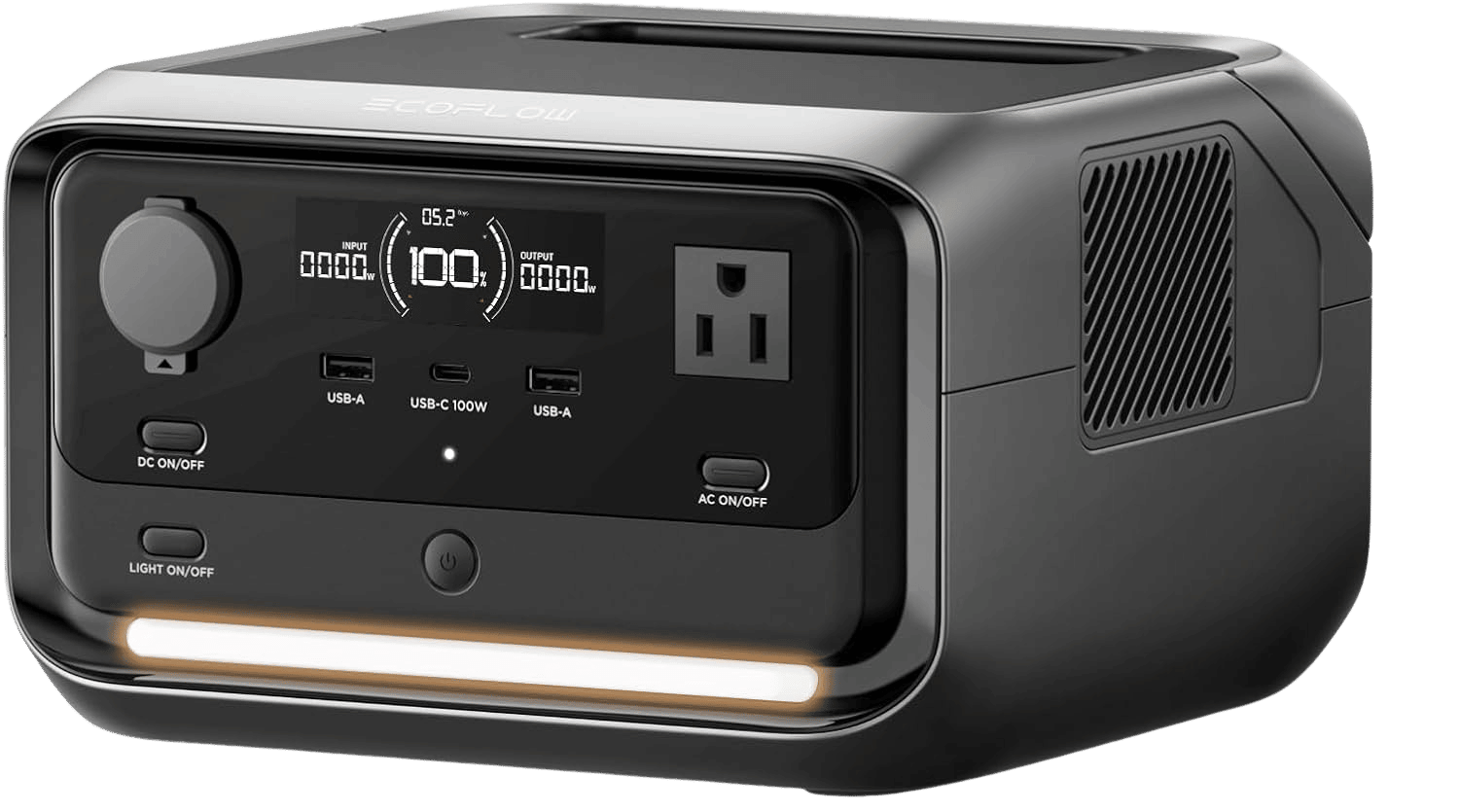
EcoFlow RIVER 3 Plus
286Wh LFP, 600W AC, 3 outlets (X-Boost ~1200W), ~1 hr charge, 220W solar, expandable to 858Wh.
⚡ ~1 hr AC recharge
~$269
Check price on AmazonView full specs →Purchase links may be affiliate links — To Support WattMatch
Anker SOLIX C300
Best feature-packed compact: The Anker SOLIX C300 is the most gadget-friendly option here. It is built for campers who bring a modern device stack and want fewer adapters: phones, tablets, cameras, battery chargers, lights, and maybe a laptop. At 288Wh and 9 lbs, it stays compact, but it makes better use of that size with a wider spread of ports.
It is best for campers who charge more over USB-C than over AC. That includes people working from camp for part of the trip, families with multiple devices, or anyone who hates fighting over ports at night. The 3 USB-C ports are the biggest advantage here, and that matters because USB-C port count has become a real buying factor for camping power, not a nice extra.
The tradeoff is that solar input is only 100W, so it is not as strong as the EcoFlow for daily solar recovery on longer trips. If your plan depends on replacing a lot of used energy every day from the sun, there is a better pick above.
Its strongest differentiator is the output mix: 3 AC outlets plus 8-way outputs overall, along with 140W USB-C and recharge to 80% in about 50 minutes. That makes it especially useful as a compact portable outlet for camping when several people need to top up gear at once. Integrated lighting, if available on your camping setup, is also genuinely handy here since this type of unit often ends up living on the table as the camp charging hub.
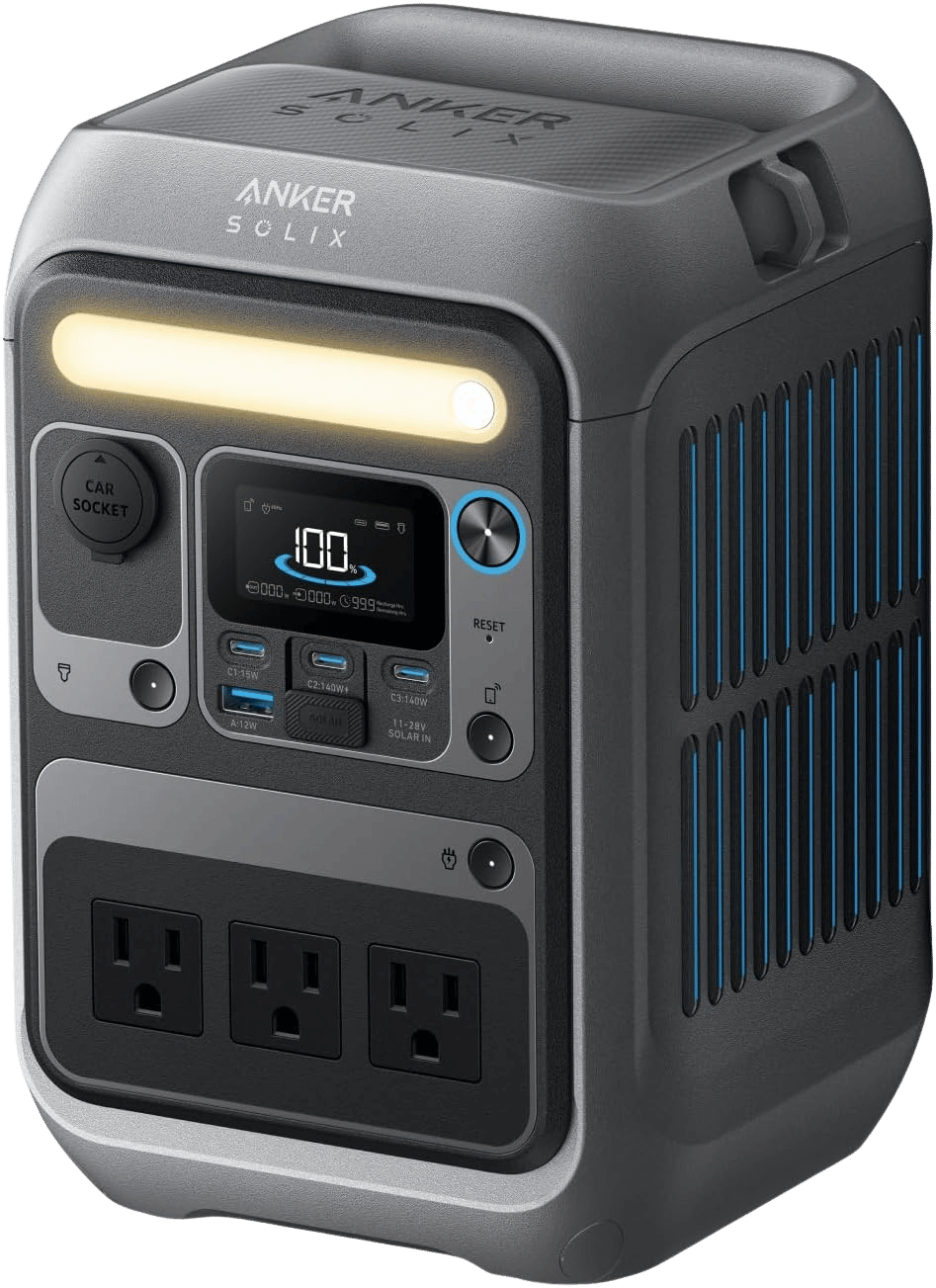
Anker SOLIX C300
288Wh LFP, 300W AC (600W surge), 3 AC + 8-way outputs, 140W USB-C, 80% in ~50 min, 100W solar.
⚡ ~50 min AC recharge
~$249
Check price on AmazonView full specs →Purchase links may be affiliate links — To Support WattMatch
Goal Zero Yeti 300
Best rugged camping pick: The Goal Zero Yeti 300 makes the most sense for campers who care less about squeezing every last spec and more about getting a compact unit that feels built for outdoor use. It stays in the same practical battery class at 297Wh, but adds a more campsite-friendly durability story with IPX4 water resistance and an outdoor-focused design.
It is best for people who expect real campground conditions instead of pristine setup photos. Morning condensation, a damp picnic table, dust, and general rougher handling are exactly where this kind of product earns its place. At 13.7 lbs, it still stays under the point where carrying it around camp becomes a chore, even if it is clearly heavier than the lightest picks here.
The tradeoff is value efficiency. It is not the lightest option, and it also does not lead this group on solar input, USB-C count, or raw inverter performance. If you mostly care about the lowest carry weight or the most modern port mix, the Jackery and Anker are better fits.
Its clearest differentiator is outdoor durability. IPX4 water resistance is a real camping advantage because campsite gear often gets used in less controlled conditions than home backup gear. Goal Zero also rates it for 4,000 cycles, which gives it a longer longevity story than most of the other compact picks here.
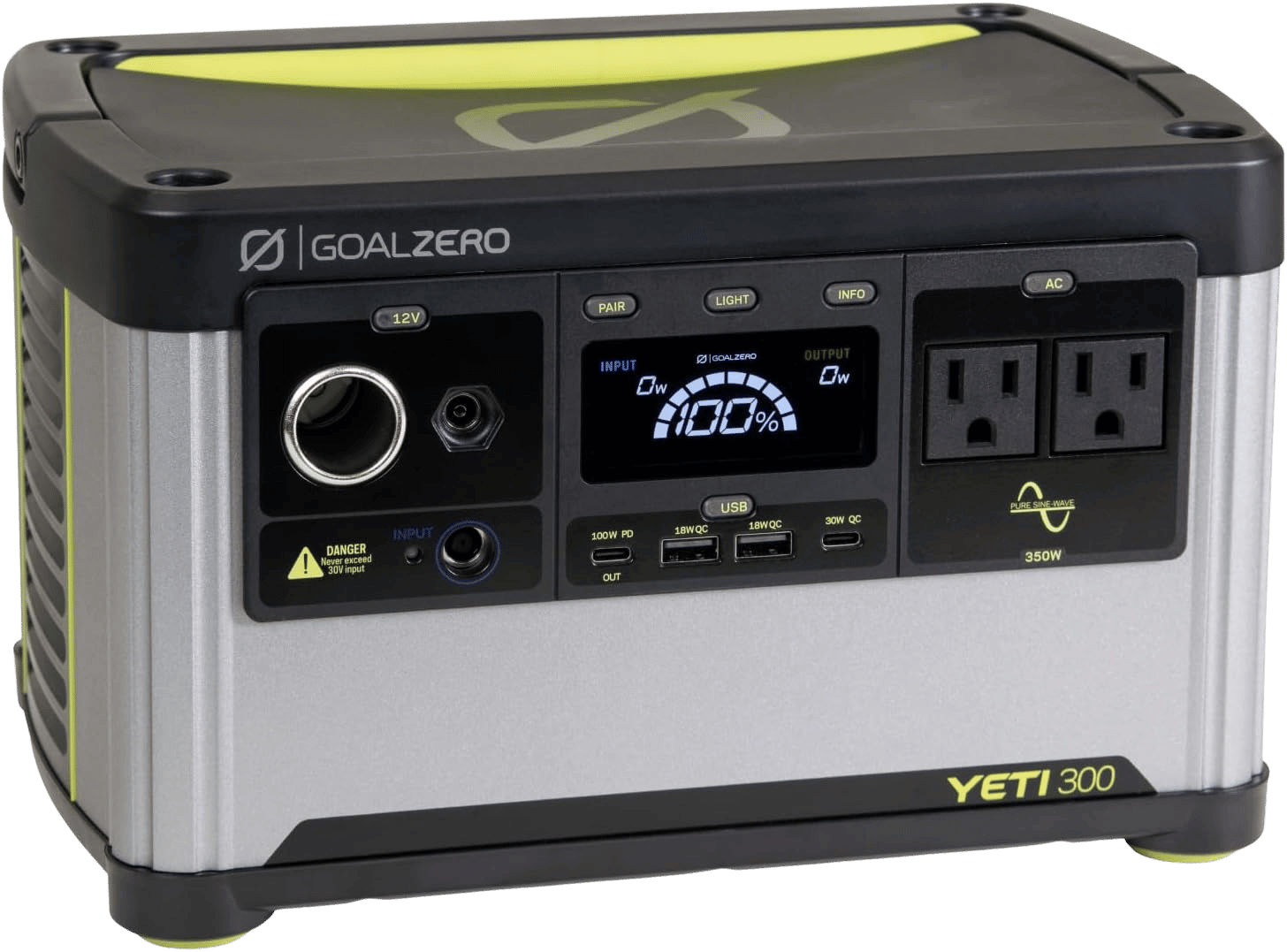
Goal Zero Yeti 300
297Wh LFP, 350W AC (600W surge), ~50 min full AC charge, IPX4, ~13.7 lb—rugged Yeti.
⚡ ~50 min AC recharge
~$349
Check price on AmazonView full specs →Purchase links may be affiliate links — To Support WattMatch
How to choose
For most campers, weight is the first filter. Capacity matters, but portability matters more if you actually have to carry the thing around camp. Anything over 15 lbs starts to feel like a burden on a campsite, especially if you are already hauling coolers, sleeping gear, and food bins. All four picks here stay under that threshold, which is exactly why they make sense for weekend camping.
Next, look at your actual nightly energy use in Wh, not just the battery label. A small fan might draw enough power to change the math fast, while lights and phones usually barely move the needle by comparison. A roughly 300Wh-class unit can work very well for one to two nights if your load is mostly small electronics and light AC use, but runtime depends on what is plugged in and for how long.
Solar input matters more on day two than day one. If you want your camping battery to stay useful on longer trips, recharge speed from solar is a major divider. The EcoFlow RIVER 3 Plus has a real edge here with 220W solar input, while the Jackery Explorer 300 Plus, Anker SOLIX C300, and Goal Zero Yeti 300 all top out at 100W. Faster solar recovery means less babysitting and less need to ration power late in the trip.
Port selection is the next practical filter. USB-C port count matters because a lot of camping electronics no longer need AC bricks at all. Phones, tablets, power banks, cameras, and even some laptops can charge directly over USB-C. The Anker SOLIX C300 leads here with 3 USB-C ports, the Jackery Explorer 300 Plus offers 2, and both the EcoFlow RIVER 3 Plus and Goal Zero Yeti 300 offer 1. If your group uses mostly modern devices, that difference is not minor.
Finally, think about campsite convenience. AC output is useful, but little quality-of-life features matter too. Integrated lighting is a practical bonus at campsites, especially when the power station sits in the middle of camp as the charging hub after dark. It will not make or break a buying decision on its own, but it is one of those features people actually use.
Compare
Compare your options
Still deciding between the top camping picks? See how the EcoFlow River 3 Plus and Jackery 300 Plus compare on solar charging speed, port selection, weight, and real-world weekend runtime.
Free · No signup · See all specs
FAQ
How big of a power station do I need for camping?
For a typical weekend setup with lights, phones, a camera, and maybe a small fan, a power station in the roughly 300Wh class is a solid starting point. That size is usually enough without getting so heavy that carrying it around camp becomes annoying.
Is 300Wh enough for one to two nights?
Often, yes. It depends on your load. Charging phones and lights uses far less energy than running AC gear for hours. A small fan can be the item that changes the math fastest, so it is worth estimating your nightly Wh use before you buy.
What matters more for camping: more battery or lower weight?
For most campers, lower weight wins once you have enough battery for your real gear. Anything over 15 lbs becomes a hassle at a campsite. A slightly smaller unit you will actually carry and use is usually a better buy than oversized capacity you do not need.
Is solar charging worth it for camping?
Yes, especially on multi-day trips. Solar recharging speed determines how practical a station is once the first night is over. In this group, the EcoFlow RIVER 3 Plus is strongest for that use because it supports 220W solar input.
Why does USB-C port count matter so much now?
Because a lot of camping gear charges directly over USB-C. More USB-C ports means fewer adapters, less fighting over outlets, and less need to use AC when you do not have to. That is especially useful for families and campers carrying several modern devices.
Takeaway
The best portable power station for camping is the one that gives you enough real runtime without becoming dead weight. For most people, that means staying in the roughly 300Wh class, prioritizing low carry weight, checking solar input for longer trips, and making sure you have enough USB-C ports for the devices you actually bring.
Related guides
These guides cover adjacent buying scenarios worth comparing.
Best Portable Power Stations for Apartment Blackouts
Apartment outage prep is not about pretending you can power a whole house. It is about keeping the essentials alive quietly, safely, and without hauling a giant battery up the stairs.
Read guide
Top 5 Budget Power Stations Under $300
Cheap power stations are easy to buy and easy to regret. The better budget picks are the ones that give you usable battery, honest limitations, and enough long-term value to avoid replacing them a year later.
Read guide