Solar Generators for Van Life: A Complete Buying Guide
Van life power gets expensive when the system is undersized and frustrating when it is poorly matched. The right setup starts with daily energy habits, solar input limits, and battery chemistry that can handle constant use.
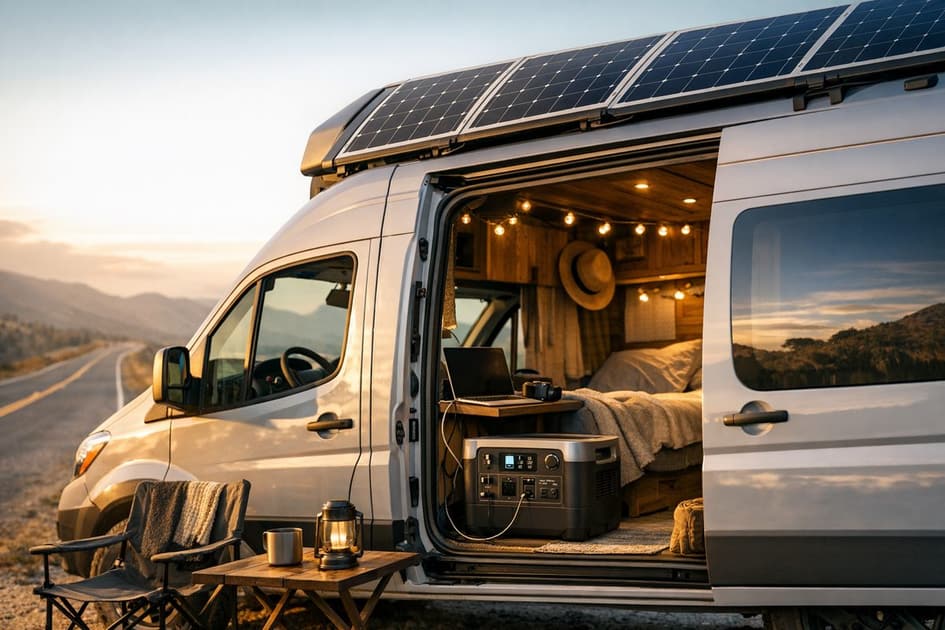
A good solar generator for van life needs to do two things well: handle daily cycling and accept enough solar to recharge in real conditions. For full-time use, that means focusing on LiFePO4 battery chemistry, usable capacity, and how much solar input the unit can actually take.
This guide is for full-time van lifers and long-term travelers running loads like a laptop, mini fridge, and lights every day. It breaks down how to size your setup, when roof solar makes sense, when portable panels help, and which picks stand out for real full-time use rather than brochure specs. If you want a broader look at mobile setups, the van life power guide is a good companion.
Solar
Estimate your solar recharge
Want to know if your roof panels can actually keep up with your 12V fridge and laptop? Plug your setup into the Solar Estimator to calculate your real-world recharge time.
Free · No signup · ~30 sec
Quick take
- For daily van use, LiFePO4 is the baseline. A unit with 3000+ cycles is the minimum standard for regular daily cycling.
- Solar input matters as much as battery size. A 1000Wh-class station with a weak solar input ceiling can still feel undersized in bad weather or short winter days.
- Full-time setups should think beyond one battery. Expandability can matter more than saving a few pounds.
- Roof-mounted panels and portable panels solve different problems. Most van lifers benefit from understanding both, not treating them as interchangeable.
- Among these picks, the BLUETTI AC180 is the best all-around fit, the EcoFlow DELTA 3 Plus is the better choice for higher-demand systems, and the Anker SOLIX C1000 Gen 2 is the better compact pick for serious daily use.
What matters most in a solar generator for van life
A van life power system gets used hard. This is not a backup battery sitting in a garage. It gets charged and discharged constantly, often every day.
That is why LiFePO4 is the baseline here. In this group, the BLUETTI AC180 is rated for 3000+ cycles, while the EcoFlow DELTA 3 Plus and Anker SOLIX C1000 Gen 2 are rated for 4000+ cycles. That matters because daily cycling adds up fast over years of full-time use.
The next big filter is solar input. This number sets the ceiling for how much panel wattage the power station can actually use. If your station is capped at 500W solar input, adding much more panel than that will not give you the charging gains you expect. You can compare broader options in the portable power station directory, but for full-time van use, this spec often makes or breaks the setup.
Then look at output and ports. A laptop, mini fridge, and lights are not huge loads on their own, but together they create a real daily system. You want enough AC output for your appliance mix, enough USB-C for modern gear, and enough recharge speed to recover when conditions are good.
Start with your daily watt-hour budget
The clean way to size off-grid solar is to estimate daily Wh use first. Not peak fantasy use. Actual daily use.
A simple example for a full-time van setup:
- Laptop: 60W for 5 hours = 300Wh
- 12V mini fridge: cycles on and off, but averages about 300Wh to 400Wh per day
- Lights, phones, fan, and small electronics: about 150Wh per day
That puts a realistic daily total around 850Wh, which is exactly why a 1024Wh-class power station is usually the minimum for full-time van living.
If a big share of those loads runs through the AC inverter, conversion losses can eat roughly 10% to 15% of usable energy. That is why an 850Wh daily load can leave far less real margin on a 1024Wh power station than the battery label suggests.
The point is not to guess one universal number. The point is to total your real loads in Wh per day, then compare that with battery capacity and expected recharge.
A 1024Wh or 1152Wh power station can work well for modest daily living if your solar can reliably refill it. If your energy use is high, battery size alone will not save you. You also need enough solar input to keep pace. The solar sizing tool is useful for checking whether your panel plan and daily loads actually line up.
Why one cloudy day changes the math
Full-time van living is not ideal-lab testing. You get shade, weather, winter sun angles, and days when parking orientation is bad.
That means a station with stronger solar input gives you more recovery options. It also means expandability is worth considering early, especially if you plan to add more appliances later.
Roof-mounted vs portable solar panels
Built-in roof panels are the default for full-time van life for one reason: they charge while you drive and require less setup every day. That makes them the easier long-term fit for people living off-grid full time.
Do not forget that driving days can also help recharge your system through the van's electrical setup, which can take some pressure off your solar.
But roof solar has trade-offs:
- Limited roof space
- Fixed angle
- More likely to underperform in shade
- Harder to optimize seasonally
Portable panels solve some of those issues. You can move them into direct sun while the van sits in shade. You can aim them better. They can also help squeeze more energy out of a smaller system.
Portable panels have their own downsides:
- They take setup time
- They are easier to forget, damage, or steal
- They are less convenient for quick overnights
- They add clutter to a small living space
For most full-time travelers, roof solar handles the daily baseline and portable panels work as a supplement. The real catch is that your power station still has a solar input cap. If the unit only accepts 500W, a bigger combined panel array will still bottleneck there.
Top picks for full-time van use
Best overall for van life: BLUETTI AC180
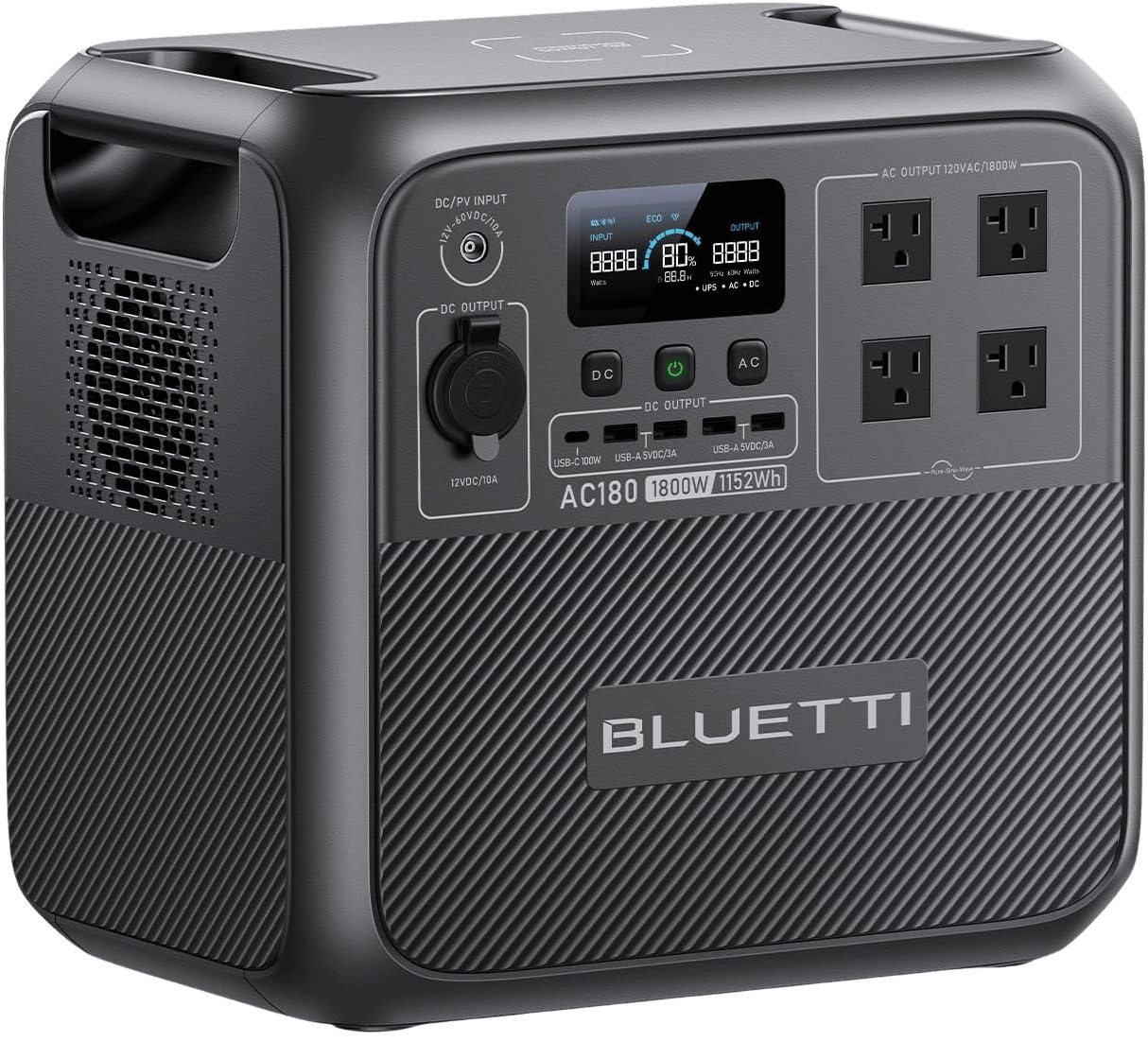
The BLUETTI AC180 is the best all-around fit here for a typical full-time setup. It gives you 1152Wh of capacity, 1800W AC output, LiFePO4 chemistry, and 500W of solar input. That mix makes sense for someone running everyday loads without overspending on a bigger system than they need.
The 1152Wh capacity gives it a little more room than the 1024Wh models, which helps when your mini fridge and work gear are both part of daily use. The 3000+ cycle rating is also the minimum a daily-use van unit should hit. At 37.4 lbs, it is not the lightest option, but for a unit that mostly stays in the van, the trade-off is reasonable.
BLUETTI AC180
1152Wh LFP, 1800W AC (2700W peak w/ app), ~45 min to ~80%, ~1 hr full AC, 500W solar.
⚡ ~1 hr AC recharge
~$449
Check price on AmazonView full specs →Purchase links may be affiliate links — To Support WattMatch
Best for high-demand setups: EcoFlow DELTA 3 Plus
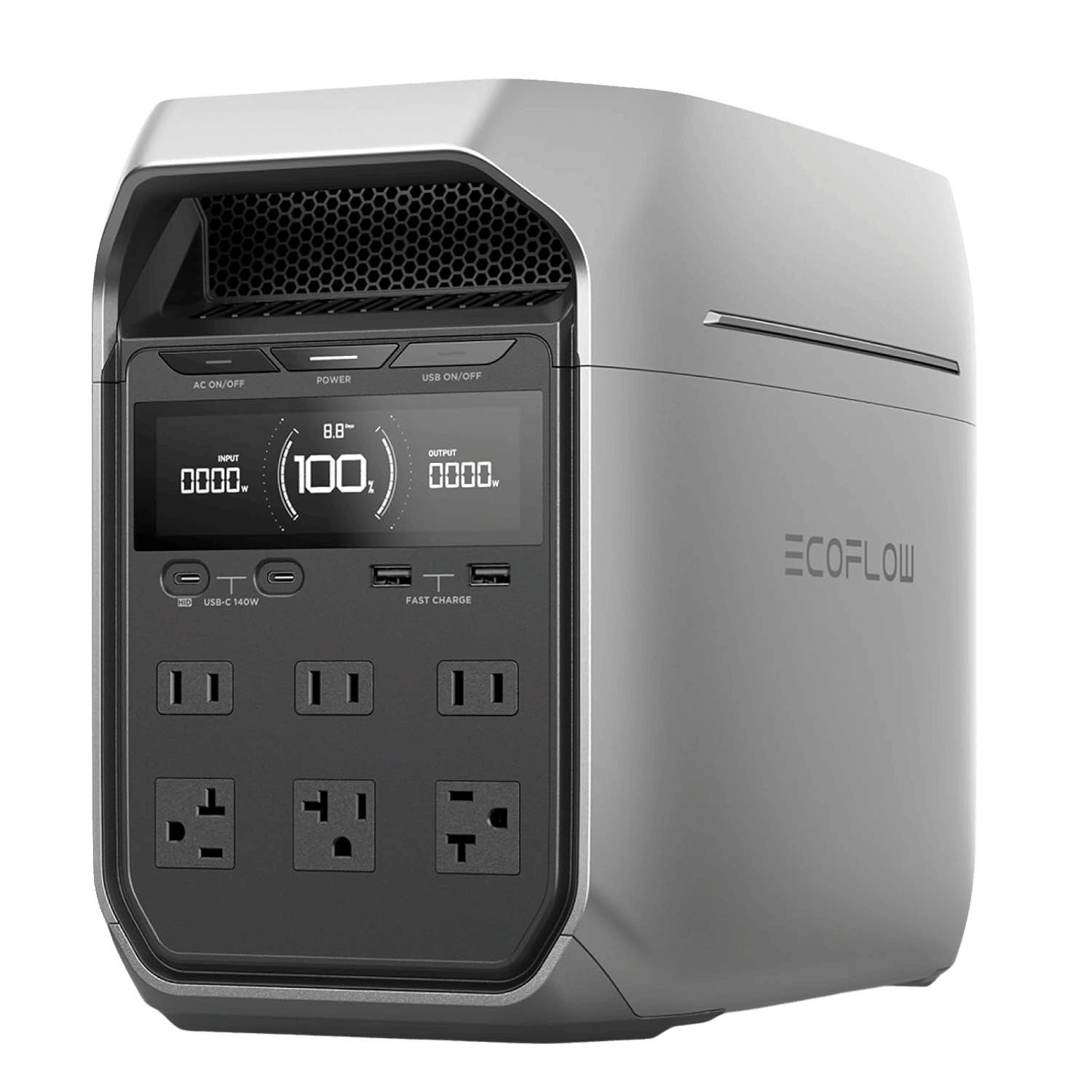
The EcoFlow DELTA 3 Plus is the one to look at when your setup has higher daily demand or a more serious solar plan. Its biggest advantage is 1000W of solar input, which is a major step up from the others here. For full-time van use, that can matter more than a small difference in battery size because it lets you recharge faster and put more panel wattage to work.
It also has 1024Wh capacity, 1800W AC output, LiFePO4 chemistry, 4000+ cycles, and expansion up to about 5kWh. That matters for people who know their van life power system may grow. If you start with a laptop, fridge, and lights but later add more always-on gear, this is the pick with the clearest upgrade path.
EcoFlow DELTA 3 Plus
1024Wh LFP, 1800W AC + 140W USB-C, X-Boost >2200W resistive, ~27 lb, expandable ~5kWh, 10ms UPS.
⚡ ~56 min AC recharge
~$649
Check price on AmazonView full specs →Purchase links may be affiliate links — To Support WattMatch
Best step-up pick for full-time living: Anker SOLIX C1000 Gen 2
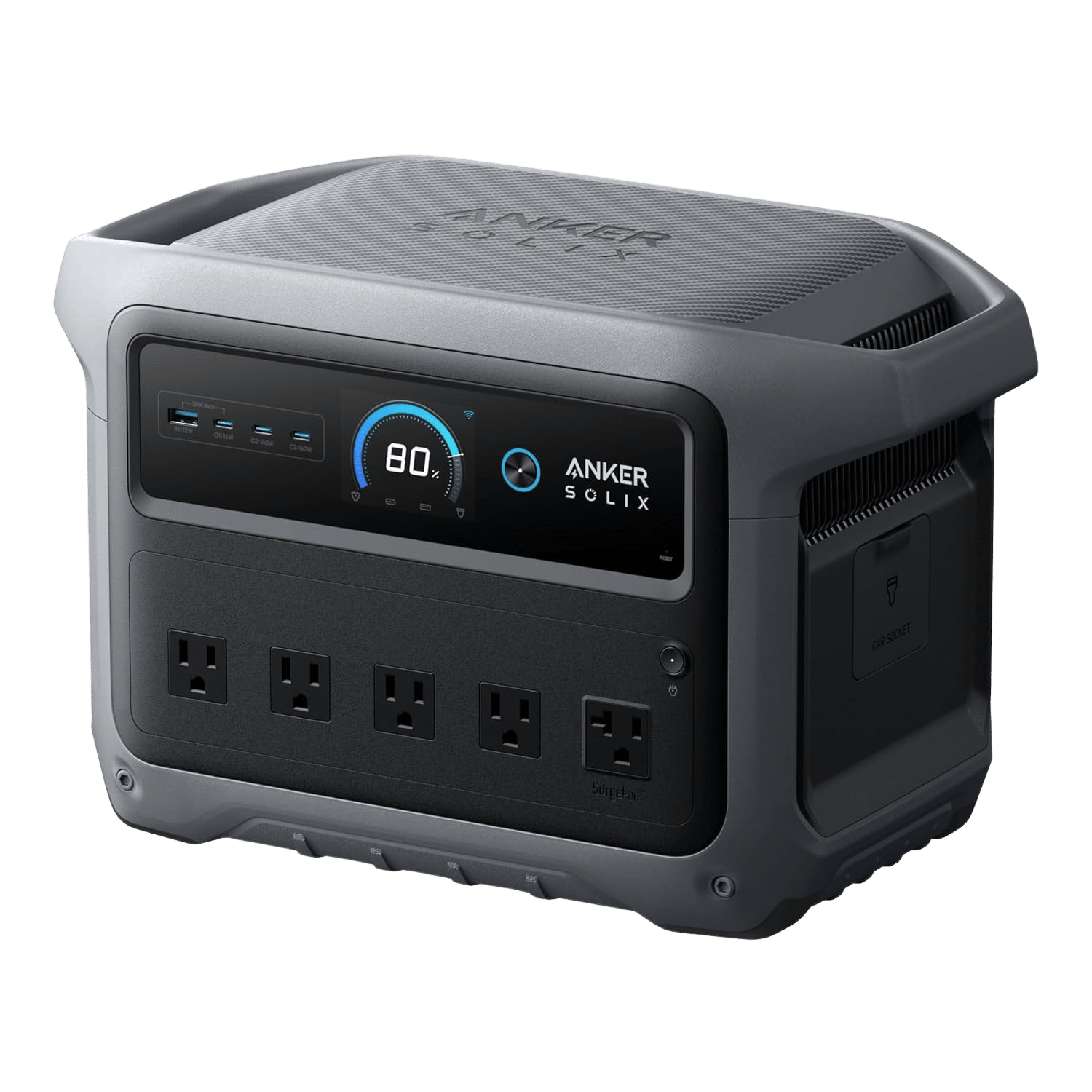
The Anker SOLIX C1000 Gen 2 fits well when you want a more compact daily-use unit without stepping down into weaker specs. It gives you 1024Wh, 2000W output, 600W solar input, LiFePO4 chemistry, and 4000+ cycles in a 24.9 lb package.
That makes it appealing for van lifers who move gear in and out often or just do not want to wrestle with a heavier box. The 600W solar input is meaningfully better than a 500W ceiling, and the 4000+ cycle rating is exactly the kind of durability you want for full-time charging and discharging. It is a practical middle ground between portability and serious daily-use performance.
Anker SOLIX C1000 Gen 2
1,024Wh LiFePO4, 2,000W output (3kW peak), ~49 min wall charge, 600W solar—compact backup for home and camping.
⚡ ~49 min AC recharge
~$499
Check price on AmazonView full specs →Purchase links may be affiliate links — To Support WattMatch
How to choose between these three
Pick the AC180 if you want the simplest all-around answer
Choose the BLUETTI AC180 if your loads are steady and your solar plan is moderate. It has the highest capacity of the three at 1152Wh and enough output for common van appliances without forcing you into a bigger system than you need.
Pick the DELTA 3 Plus if recharge speed and growth matter
Choose the EcoFlow DELTA 3 Plus if you want to build around a larger solar array or leave room for future expansion. The 1000W solar input is the standout spec in this group, and that directly affects how much panel wattage you can actually use.
Pick the C1000 Gen 2 if you want lighter daily-use gear
Choose the Anker SOLIX C1000 Gen 2 if you want something easier to move without dropping into weaker daily-use specs. At 24.9 lbs, it is much easier to handle than bulkier stations, but it still delivers 1024Wh, 2000W output, and 600W solar input.
Expandability is worth thinking about now
A lot of van builds start small and then sprawl. First it is a laptop and lights. Then a mini fridge. Then maybe Starlink, more fans, or more work gear.
That is why expandability matters. Even if one battery covers your current needs, add-on battery support can save you from replacing the whole system later. In this group, the EcoFlow DELTA 3 Plus stands out because it is expandable to about 5kWh. For full-time living, that is not a bonus feature. It is a real planning advantage.
If you know your power needs will stay modest, a fixed-capacity unit can still make sense. But if your travel style changes with seasons, work, or connectivity needs, expansion support is worth putting on the checklist from day one.
FAQ
How big should a solar generator for van life be?
For a full-time setup running a laptop, mini fridge, and lights every day, the right size depends on your actual Wh use and how much solar recharge you can get. In this group, 1024Wh to 1152Wh is a workable starting point, but daily solar recovery matters just as much as battery size.
Is LiFePO4 really necessary for van life?
Yes. For daily use, LiFePO4 is the right battery chemistry. A van power station gets cycled constantly, so 3000+ cycles should be treated as the minimum.
How much solar input do I need?
More than many buyers expect. Solar input limits how much panel wattage your station can actually use. The BLUETTI AC180 accepts 500W, the Anker SOLIX C1000 Gen 2 accepts 600W, and the EcoFlow DELTA 3 Plus accepts 1000W. For full-time off-grid use, that difference matters.
Are portable panels better than roof panels for van life?
Not across the board. Roof panels are more convenient for daily use and charge while driving. Portable panels are more flexible in shade and can be aimed at the sun. Most full-time van lifers do best with roof solar as the base and portable panels as supplemental solar.
Takeaway
The best solar generator for van life is the one that matches your real daily Wh use, accepts enough solar to recover reliably, and uses LiFePO4 with at least 3000+ cycles for daily use. For most people, the BLUETTI AC180 is the best overall fit, the EcoFlow DELTA 3 Plus is the smarter choice for higher-demand or expandable solar setups, and the Anker SOLIX C1000 Gen 2 is the better compact option for serious daily use.
Related guides
These guides cover adjacent buying scenarios worth comparing.
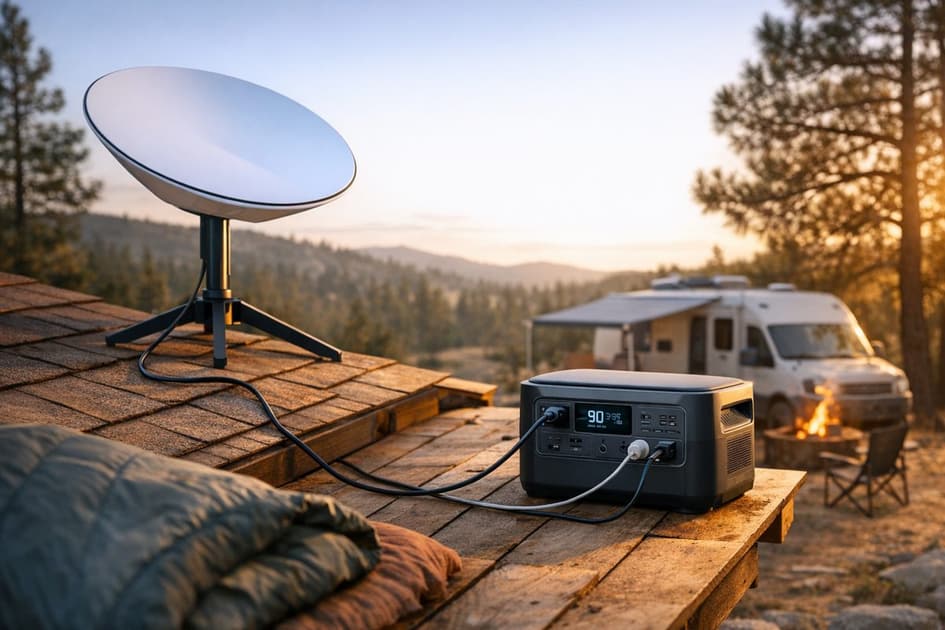
Best Portable Power Stations for Starlink Off-Grid
Starlink is a battery problem before it is a power problem. The real challenge is sustaining a steady draw for hours without carrying more weight and capacity than you actually need.
Read guide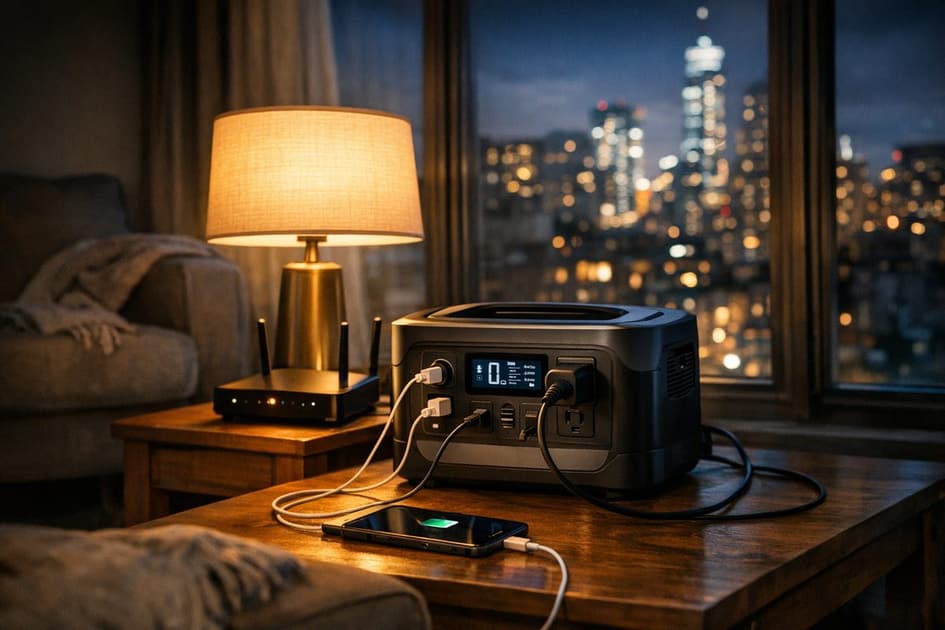
Best Portable Power Stations for Apartment Blackouts
Apartment outage prep is not about pretending you can power a whole house. It is about keeping the essentials alive quietly, safely, and without hauling a giant battery up the stairs.
Read guide